Updated 2 weeks ago
What is a solar tracker and is it worth the investment?
Written by
Catherine Lane
Find out what solar panels cost in your area
Solar trackers are devices that allow your solar panel array to follow the sun’s path in the sky to produce more energy for you to use.
Solar tracking systems do come with a high price tag. Is the extra solar power output you’re getting worth the additional cost of a solar tracker? In most cases, it makes more sense to just install more solar panels.
In this article, find out everything you need to know about solar trackers – and if they’re worth the cost.
What is a solar tracker?
A solar tracker is a device that follows the sun as it moves across the sky. When solar trackers are coupled with solar panels, the panels can follow the path of the sun and produce more renewable energy for you to use.
Solar trackers are usually paired with ground-mount solar systems, but recently, rooftop-mounted trackers have come onto the market.
Typically, solar tracking equipment will be connected to the racking of the solar panels. From there, the solar panels will be able to move along with the movement of the sun.
The way a solar tracking system moves is dependent on the type of system it is. There are three types of sun tracking systems:
1. Manual solar trackers
Manual trackers require someone to physically adjust the panels at different times throughout the day to follow the sun. This isn’t always practical, as you need someone to constantly monitor the sun and change the position of the solar panel system.
2. Passive solar trackers
Passive trackers contain a liquid with a low boiling point that will evaporate when exposed to solar radiation. When the liquid evaporates, the tilt system becomes imbalanced. This imbalance causes the panels to tilt towards the direction of the sun’s rays.
3. Active solar trackers
Active trackers rely on motors or hydraulic cylinders to change position. The motors in active trackers will move the PV panels so they are facing the sun. While this is more convenient than manual trackers, the moving parts within the motors could easily break. This could lead to higher maintenance costs over the lifetime of the system.
From there, solar trackers can be categorized even further based on which direction they move. A solar tracker can be either:
Single-axis solar tracker
Dual-axis solar tracker
Single-axis solar tracker
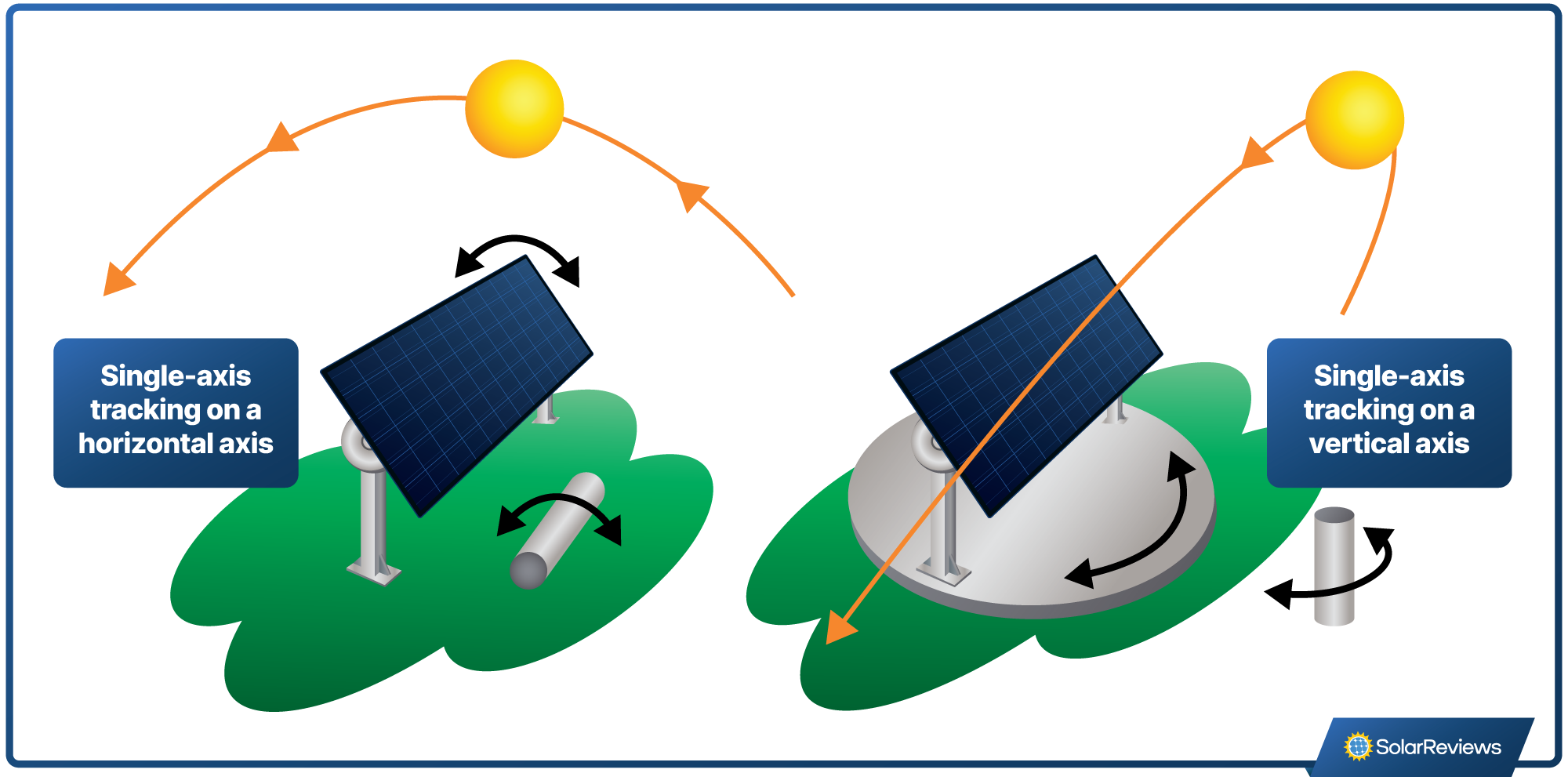
Single-axis trackers follow the position of the sun as it moves from east to west. These are usually used in utility-scale projects. A single-axis tracker can increase production between 25% to 35%.
Dual-axis solar tracker
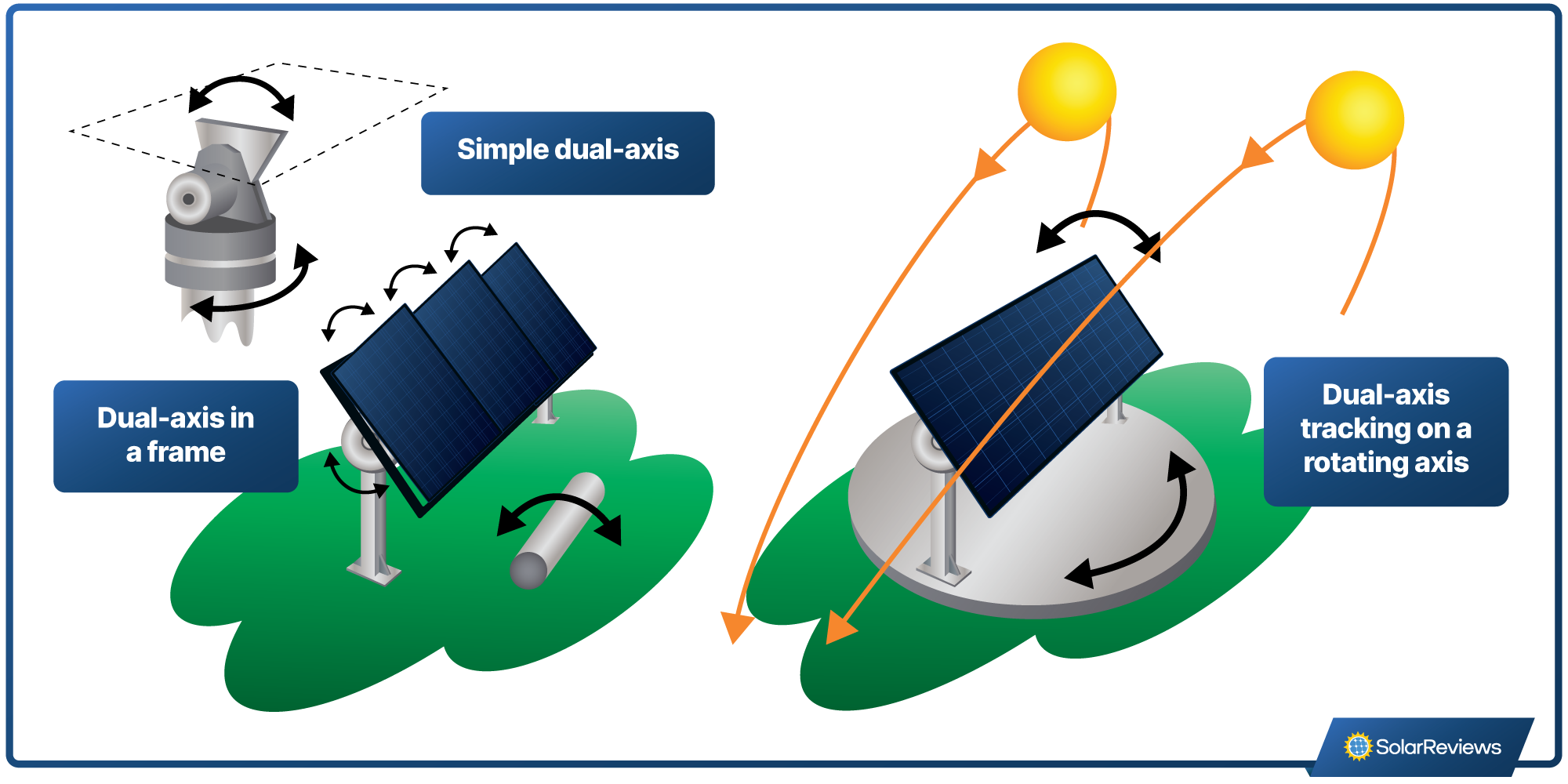
This tracker not only tracks the sun as it moves east to west but also follows it as it moves from north to south. Two-axis trackers are more common among residential and small commercial solar projects that have limited space, so they can produce enough power to meet their energy needs.
Dual-axis trackers can increase energy production by about 40%.
How much does a solar tracker cost?
Solar trackers can greatly increase the cost of a photovoltaic solar installation. A standard 4-kilowatt ground-mounted solar system will cost about $13,000. Tracking equipment can cost anywhere from $500 per panel to over $1,000 per panel.
If you included a single-axis tracking system on the same array, it would drive the cost up to about $20,000. That’s a premium of 57% over the cost of the fixed array for just 35% more solar output.
A dual-axis tracking system would cost even more, coming out to around $26,000. That’s double the cost of the entire fixed ground-mounted system!
What are the pros and cons of using a solar tracker?
Just like everything else, solar trackers have benefits and drawbacks.
Pros of solar trackers
Tracking systems offer greater levels of energy output compared to fixed solar arrays because they can follow the sun’s movements.
The variety of trackers available from manufacturers like Allearth Solar and First Sunergy makes it possible to find a unit that’s just right for your needs.
Solar trackers are very beneficial in areas with Time of Use electricity rates. More energy will be able to be produced during peak hours, which means you won’t have to pay for grid energy when it’s most expensive.
Cons of solar trackers
Solar trackers are very expensive and can easily double project costs.
Solar trackers are made up of moving parts, which means they are more likely to break. This leads to higher maintenance costs.
Deciding to install trackers may require additional site planning and preparation, including digging additional wiring trenches and extra site grading.
Are solar trackers worth the additional investment?
In most cases, solar trackers are not worth the additional investment, even though they do produce more electricity. Because solar panels are cheaper than ever, it would cost less to install more solar panels than it would to include a tracking system.
For example, let’s say you installed 15 ground-mounted solar panels that had a power rating of 300 watts. The total cost of this system would be $14,625.
Now, let’s say you wanted to have a single-axis solar tracker included in this system. That would cost an additional $500 per solar module. That’s $7,500 just for the tracking equipment. Installing double-axis tracking equipment would cost you an extra $15,000!
It is true that the systems with tracking equipment would produce more electricity than the fixed system. But are the additional savings really worth the enormous added costs of tracking equipment?
The following table lists out how much a fixed system, a single-axis tracking system, and a dual-axis tracking system would save you on your electricity bill:
Solar system type | System cost | Annual energy savings | Estimated payback period |
|---|---|---|---|
Fixed ground-mounted system | $14,625 | $1,100 | 13 years |
Ground-mounted system with single-axis tracker | $22,125 | $1,430 | 15.5 years |
Ground-mounted system with double-axis tracker | $29,625 | $1,540 | 19 years |
You would spend an extra $15,000 for a tracking system, and in return only get an additional $440 in savings a year. The payback period for the system would jump to almost 20 years!
Instead, you could install 6 additional solar panels and generate the same amount of power that a dual-axis system would. The best part is you would only have to spend an extra $5,850 to increase the number of panels in your solar energy system.
To track or not to track?
In almost all scenarios, especially for residential solar systems, solar trackers are not worth the additional investment. This is why solar trackers aren’t widely used in the residential solar industry.
Where solar trackers do become useful is when you have limited space for an installation. If you do not have the space for additional solar panels, installing a solar tracking system would allow you to produce more power in a limited area. Solar trackers are also useful in large-scale utility or commercial installations.
It’s important to consult with a local solar installer to find out exactly how much a solar tracking system would cost you. You can use our solar calculator to get an idea of the price of solar in your area and how much making the switch to solar can save you on your electric bill.
Key takeaways
-
Solar tracking systems allow solar panels to follow the sun’s path in the sky to produce more solar electricity.
-
While solar trackers will increase the solar panel system’s energy production, they are very expensive and can potentially double the cost of installing solar panels.
-
In many cases, it is cheaper to install more solar panels to increase the system’s energy output than it is to install a solar tracker.
-
If you have limited space and cannot install more solar panels, then a solar tracker might be the best option for you.
Catherine is the Written Content Manager at SolarReviews, where she has been at the forefront of researching and reporting on the solar industry for five years. She leads a dynamic team in producing informative and engaging content on residential solar to help homeowners make informed decisions about investing in solar panels. Catherine’s expertise has garnered attention from leading industry publications, with her work being featured in Sola...
Learn more about Catherine Lane